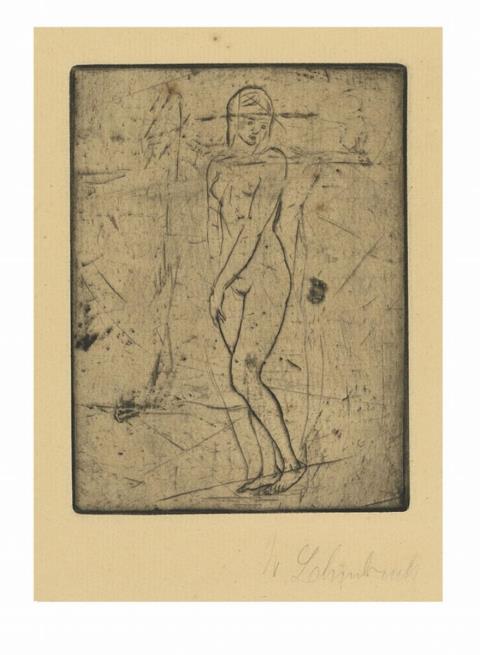
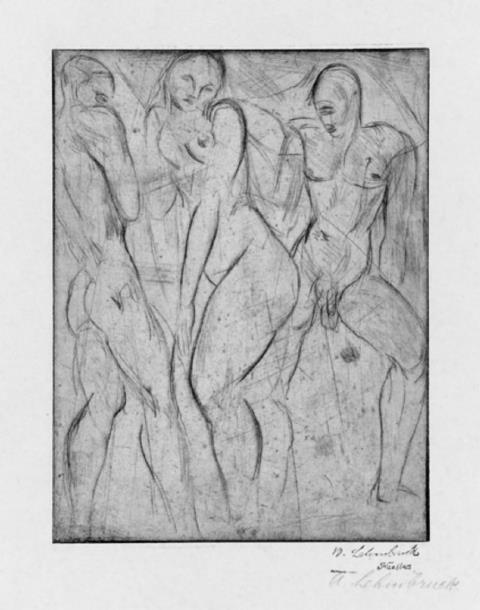
Wilhelm Lehmbruck — Training in Düsseldorf and Encounter with Rodin
Wilhelm Lehmbruck was born on 4 January 1881 in Meiderich near Duisburg. He came from modest circumstances; after the early death of his father, the support of his drawing teacher enabled him to attend the Düsseldorf School of Arts and Crafts in 1899. During this period Lehmbruck earned his living, among other things, through decorative work and illustrations for scientific publications, and was also supported by a scholarship from his home municipality.
In 1901, Wilhelm Lehmbruck began studying sculpture at the Düsseldorf Academy of Art, where he became a master pupil of Karl Janssen. A formative experience for him was the International Art Exhibition in Düsseldorf in 1904, where contemporary French art was presented on a large scale. The work of Auguste Rodin in particular made a lasting impression on the young sculptor. Alongside Rodin, Albert Bartholomé also influenced him, as did the impressions he gathered on study trips to the Netherlands, Belgium and Italy. His encounter with Italian art, in particular, became an important experience on his path towards a more concentrated, tectonically clear conception of the human body.
Wilhelm Lehmbruck in Düsseldorf — Early Successes as an Independent Artist
In 1907, Wilhelm Lehmbruck set up his first studio of his own in Düsseldorf. A year later he married Anita Kaufmann, who frequently served as his model, supported him in business matters and contributed to the family’s livelihood through translation work. The couple had three sons; their second son, Manfred Lehmbruck, later became known as an architect.
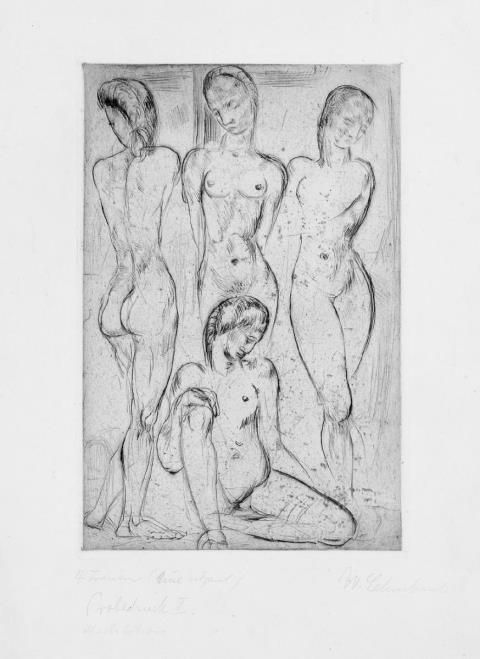
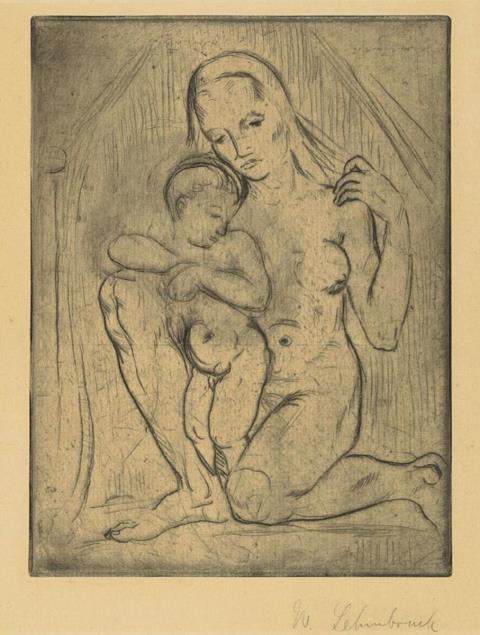
During these Düsseldorf years, Lehmbruck increasingly moved away from a purely academic form of sculpture. Although the human figure remained his central subject, he was no longer seeking outward monumentality, but rather a form in which body, posture and psychological expression were inseparably joined. Even in his early works, one can already discern the interest in stillness, concentration and inner tension that would come to define his later oeuvre.
Paris 1910 — Artistic Renewal and the Embrace of Modernism
Lehmbruck’s move to Paris in 1910 marked a decisive artistic new beginning. Together with his family, he left Düsseldorf in order to free himself from the academic tradition of the 19th century and to discover new artistic impulses. In Paris, Lehmbruck came into contact with the international avant-garde. He met Alexander Archipenko, engaged with Auguste Rodin’s conception of the figure and became familiar with the female nudes of Aristide Maillol.
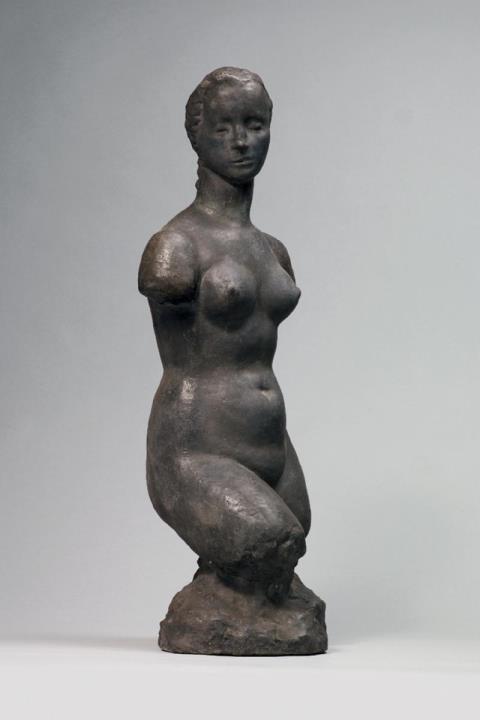
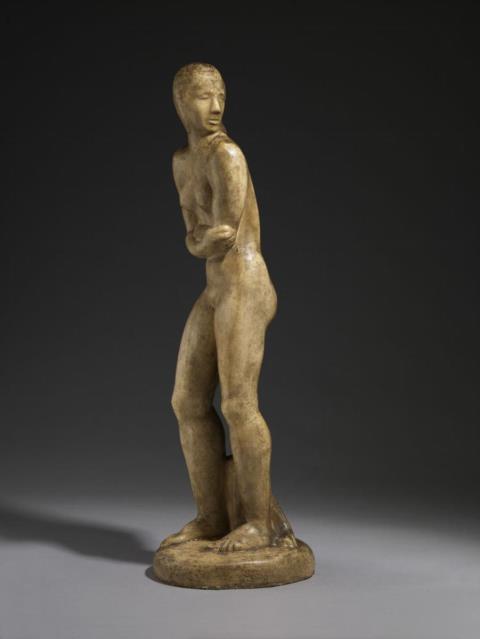
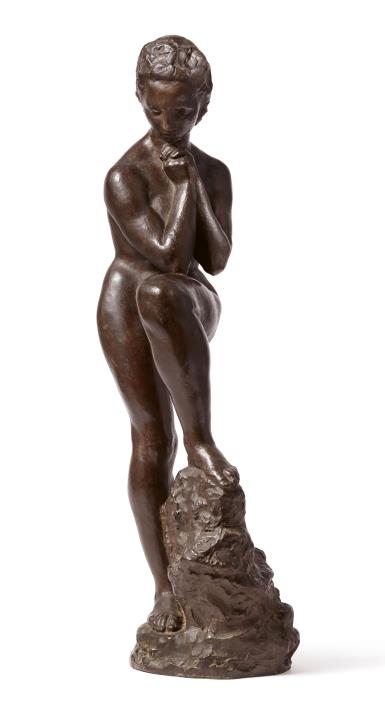
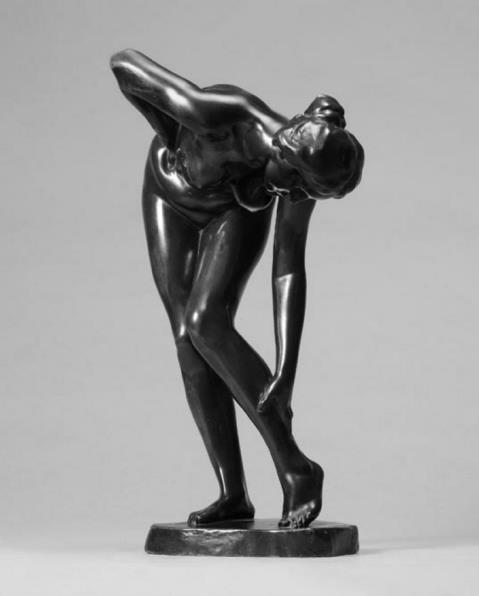
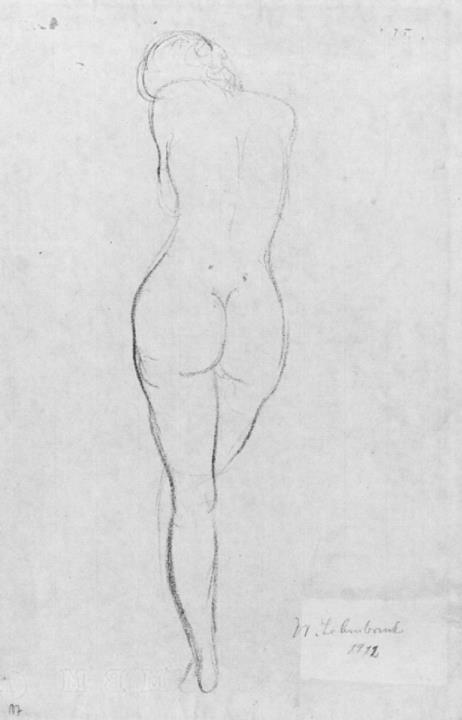
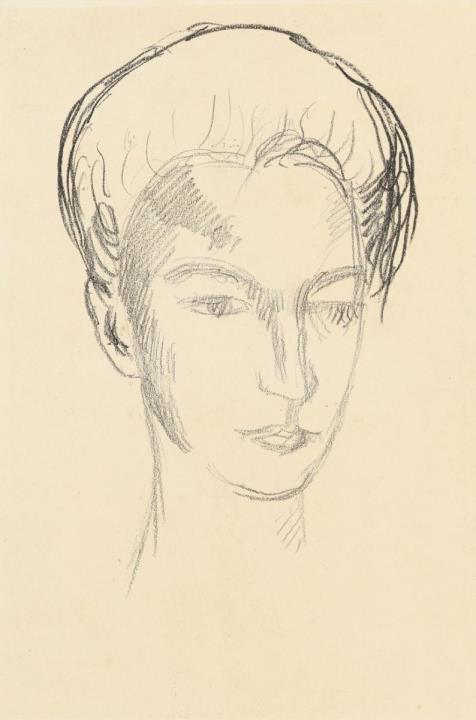
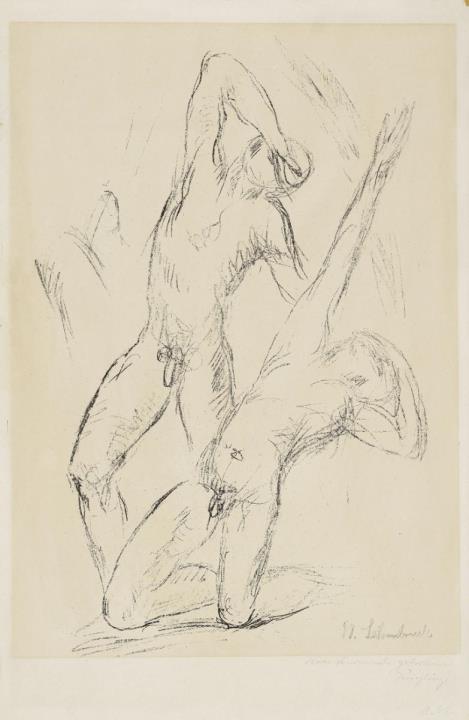
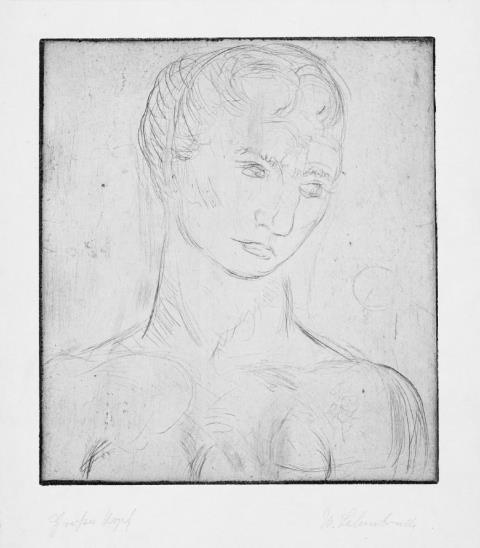
During this period, Wilhelm Lehmbruck developed an increasingly independent formal language. In his work, the body is no longer understood as a naturalistic likeness, but as a bearer of mood, attitude and spiritual concentration. Overlong limbs, inclined heads, narrow shoulders and restrained gestures lend his figures a quiet, almost removed presence. Works such as the Große Stehende, the Große Kniende and the torsos created around 1910 demonstrate this new balance between classical formal discipline and modern expressive power.
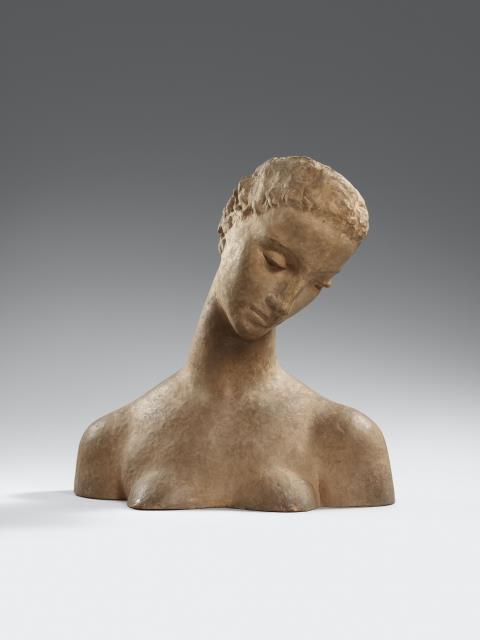
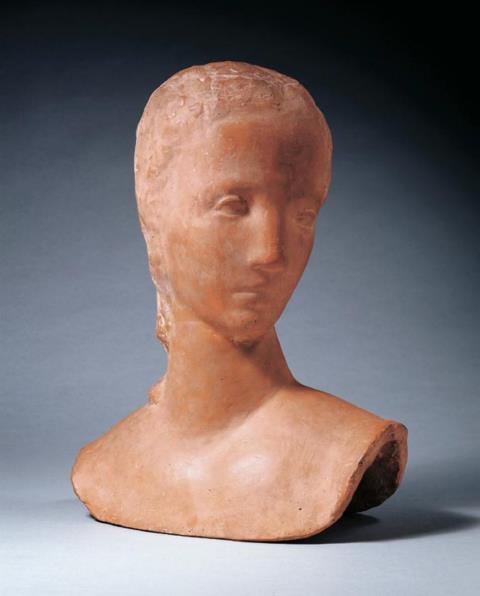
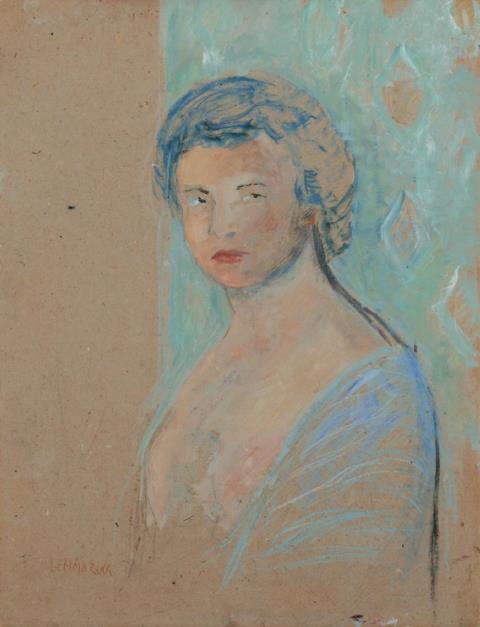
The Frauenbüste (Büste L.) also belongs within this context. In this work, Lehmbruck’s new vision of the figure is condensed with particular clarity: the slightly inclined position of the head, the inward-looking expression and the quiet self-containment of the form already anticipate the introspective quality that would become one of the defining features of his mature work. In the version executed in white marble, the figure’s delicate restraint comes especially to the fore; the polished, subtly shimmering stone further emphasises the sculpture’s sensitive animation.
Wilhelm Lehmbruck and the 1912 Sonderbund Exhibition in Cologne
The 1912 Sonderbund Exhibition in Cologne became an important forum for Wilhelm Lehmbruck’s international recognition. This exhibition, central to the development of modern art, included works not only by Lehmbruck but also by Vincent van Gogh, Paul Gauguin, Edvard Munch, Pablo Picasso and Wassily Kandinsky, among others. Lehmbruck presented several of his most recent sculptures there and was able to assert himself in direct proximity to the leading positions of the European avant-garde.
The exhibition made visible the independence of Lehmbruck’s contribution to modern sculpture. While many of his contemporaries pursued expressive intensification or Cubist fragmentation of form, Lehmbruck developed a quiet, concentrated and profoundly human visual language. His figures do not take effect through dramatic movement, but through inner tension. It was precisely this combination of outward reduction and psychological intensity that established his distinctive position within Classical Modernism.
Important collectors and patrons also recognised the quality of his work at an early stage. Among them was the Cologne industrialist and art patron Hermann Hertz, one of the co-founders of the Sonderbund Exhibition. His acquisition of Lehmbruck’s Frauenbüste (Büste L.) from the Cologne exhibition demonstrates the esteem in which the sculptor was already held at that time among progressive collectors.
International Recognition, the Armory Show and the Kunsthalle Mannheim
In 1913, Wilhelm Lehmbruck was the only German sculptor represented at the Armory Show, the International Exhibition of Modern Art in New York. This exhibition became a key event in the reception of European modernism in the United States and attests to Lehmbruck’s early international recognition.
During the First World War, Lehmbruck was spared direct front-line service because of a medically certified hearing impairment. In 1916, Fritz Wichert, director of the Kunsthalle Mannheim, organised the artist’s first major solo exhibition. During this period, the art dealer Paul Cassirer arranged several sales to the Mannheim entrepreneur and collector Sally Falk. Despite the political and personal strains of the war years, Lehmbruck produced central works during this phase in which his theme of human vulnerability became ever more concentrated.
Late Years, Personal Crisis and Legacy
The final years of Wilhelm Lehmbruck’s life were marked by increasing inner tension, family conflicts and the burdens of the war. In Zurich and later in Berlin, the depression from which the artist suffered intensified. At the same time, it was precisely during these years that he created works of extraordinary poignancy, in which grief, loneliness and existential fragility found a sculptural form of unprecedented intensity.
Shortly before his death, Wilhelm Lehmbruck was appointed to the Prussian Academy of Arts. On 25 March 1919, he took his own life in Berlin.
Today, Lehmbruck’s oeuvre is considered one of the major achievements of German and European sculpture of the early 20th century. With his slender, spiritualised figures, he created a modern image of the human being that is neither heroic nor decorative, but marked by inward concentration, melancholy and quiet dignity. His sculptures stand at the threshold between classicism and modernism and shaped the development of sculpture far beyond his brief lifetime.
A deeper insight into this artistic new beginning is offered by the article on Wilhelm Lehmbruck’s “Female Bust (Bust L.)”, which was exhibited at the 1912 Sonderbund Exhibition in Cologne.
Discover the “Female Bust (Bust L.)” in the catalog of Lempertz.
Wilhelm Lehmbruck - Works that have already been sold at Kunsthaus Lempertz: